

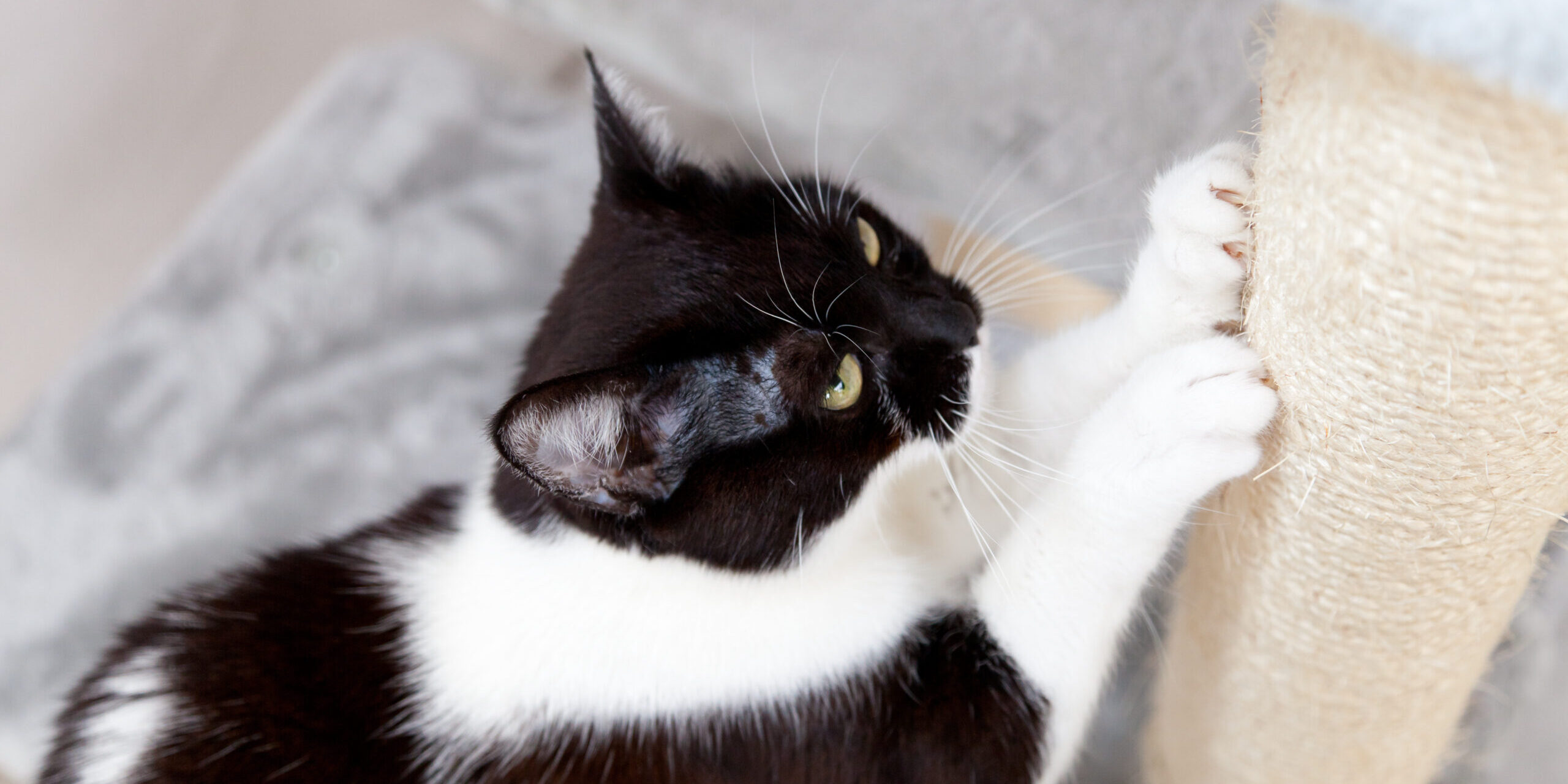
If you live with a cat, you’ve probably experienced the frustration of finding scratch marks on furniture, door frames, or carpets. While scratching can feel like a behavioral problem, it’s actually a completely natural and necessary part of being a cat. Understanding why cats scratch is the first step toward redirecting the behavior in a way that works for both you and your cat.
One of the main reasons cats scratch is to maintain their claws. Scratching helps remove the outer sheath of the claw, keeping it healthy and sharp. It also allows cats to stretch their muscles, especially through the shoulders, back, and legs. This full-body stretch is an important form of physical maintenance, particularly for indoor cats who may not have as many opportunities for natural movement.
Scratching is also a form of communication. Cats have scent glands in their paws, and when they scratch, they leave behind both visual marks and scent signals. This helps them mark territory and feel secure in their environment. Even in a loving, stable home, scratching helps cats establish ownership of their space and reduces stress.
Because scratching is instinctive, the goal isn’t to stop it – it’s to redirect it. The first step is providing appropriate scratching options. Cats tend to prefer sturdy surfaces that don’t wobble. Vertical scratching posts allow for full stretches, while horizontal scratchers appeal to cats who like to dig and rake. Offering a variety of textures, such as sisal, cardboard, and carpet, increases the chances your cat will choose an approved surface.
Placement matters just as much as the scratcher itself. Cats often scratch in high-traffic areas or near places they rest. Creating a calm, comfortable environment around key resources – like food, sleeping areas, and the litter box – can also reduce stress-related scratching. A thoughtfully designed litter box setup, such as KatKAVE, helps support this by giving cats a private, low-stress space that encourages consistent bathroom habits and overall comfort.
When your cat scratches something they shouldn’t, avoid punishment. Yelling or spraying water can increase anxiety and may even worsen unwanted behavior. Instead, calmly redirect your cat to an appropriate scratching surface and reward them with praise or treats when they use it. Positive reinforcement helps your cat learn what’s acceptable without damaging trust.
You can also make off-limits surfaces less appealing. Furniture covers, double-sided tape, or textured mats can discourage scratching without causing stress. Regular nail trimming can help reduce damage, but it should never replace providing proper scratching outlets.
Scratching isn’t bad behavior: it’s essential behavior. By understanding your cat’s needs, offering proper scratching options, and supporting their comfort with solutions like KatKAVE, you can protect your home while helping your cat feel confident, secure, and content.