
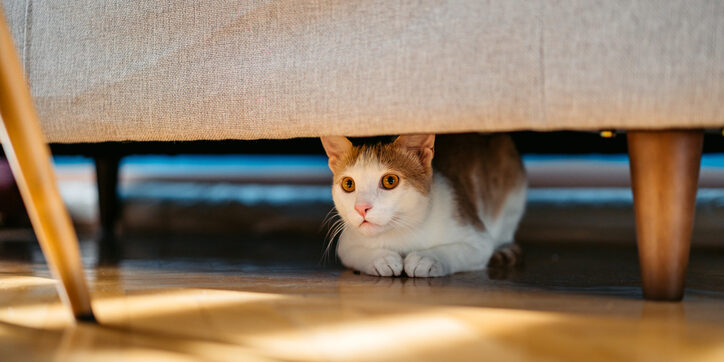
Cats are often seen as independent and low-maintenance pets, but many cats experience anxiety just like people do. Changes in their environment, unfamiliar visitors, loud noises, or even boredom can cause stress for our feline friends. An anxious cat may hide more than usual, avoid the litter box, overgroom, or become unusually vocal.
Understanding the causes of anxiety and creating a safe, enriching environment can help your cat feel more secure and relaxed.
Recognizing Signs of Anxiety in Cats
Cats can’t tell us when they’re feeling stressed, but their behavior often reveals it. Some common signs of anxiety include:
- Hiding frequently or avoiding interaction
- Excessive grooming or hair loss
- Changes in appetite
- Litter box avoidance
- Aggression or sudden irritability
- Constant meowing or pacing
If these behaviors appear suddenly or worsen over time, it’s important to rule out medical causes with your veterinarian. Once health concerns are addressed, focusing on stress reduction can make a big difference.
Provide Safe Spaces
Cats feel safest when they have places where they can retreat and observe their surroundings without being disturbed. High perches, cozy hideaways, and quiet corners allow cats to decompress when they feel overwhelmed.
Creating designated safe zones around your home helps anxious cats regain control over their environment. Even something as simple as a covered bed or a tucked-away resting area can become a comforting refuge.
Maintain a Consistent Routine
Cats thrive on predictability. Feeding, playtime, and bedtime happening at consistent times each day can reduce uncertainty and help anxious cats feel more secure.
Try to avoid sudden changes whenever possible. If you anticipate a change, such as moving furniture, traveling, or bringing a new pet home, introduce it gradually so your cat has time to adjust.
Encourage Play and Mental Stimulation
A bored cat is more likely to become stressed or develop unwanted behaviors. Daily interactive play provides both physical exercise and mental stimulation, helping cats release pent-up energy and anxiety.
Wand toys, puzzle feeders, and rotating toys throughout the week can keep things interesting. Even short play sessions can help redirect nervous energy into positive activity.
Create Vertical Territory
Cats naturally feel safer when they can climb and observe their surroundings from above. Cat trees, shelves, or window perches provide a sense of security while also giving cats more territory to explore.
Vertical spaces are especially helpful in multi-pet homes, where cats may want to keep an eye on things from a comfortable distance.
Reduce Environmental Stress
Some anxiety triggers are unavoidable, but many can be minimized. Loud household noises, chaotic spaces, and constant disruptions can make sensitive cats feel uneasy.
Soft lighting, calming music, and quiet resting areas can help balance a busy household. In some cases, pheromone diffusers may also help create a calming environment.
Provide a Comfortable Retreat
For cats that experience frequent anxiety, having a dedicated retreat space can make a huge difference. A private area where they can nap, hide, and relax helps them reset when things feel overwhelming.
That’s where KatKAVE comes in. Designed with cats’ natural instincts in mind, KatKAVE creates a cozy, enclosed environment where cats can feel secure while still observing their surroundings. The cave-like design mimics the sheltered spaces cats naturally seek, helping them relax and recharge when they need quiet time.
Providing a consistent, comfortable retreat can be especially helpful for cats dealing with household changes, new pets, or unfamiliar guests.
Patience Makes All the Difference
Helping an anxious cat takes time, patience, and understanding. Small changes, like adding safe spaces, maintaining routines, and encouraging play, can significantly improve your cat’s comfort and confidence.
Every cat is different, so it may take some experimentation to discover what works best. With a supportive environment and thoughtful enrichment, even the most nervous cats can learn to feel safe, calm, and at home.
By paying attention to your cat’s needs and providing spaces where they can relax, like a cozy KatKAVE retreat, you’re helping them live a happier, healthier life.